Muscle Tension From Stress, Why It Happens and What Helps
Stress can cause muscle tension and spasm. Discover why it happens and how to manage the body process that activates this uncomfortable response.

Muscle tension from stress happens because your nervous system prepares your body to protect itself. Stress can tighten the neck, shoulders, jaw, back, hips, diaphragm, and pelvic floor. When stress becomes chronic, those muscles often stay guarded long after the stressful moment has passed.
If you have ever finished a hard week and noticed your shoulders sitting up near your ears, or woken up with a sore jaw you do not remember clenching, you already know this is real. It is not in your head, and it is not a sign that you are weak or dramatic. Psychological stress creates a physical stress response, and that response tells your muscles to tighten and prepare for action whether or not there is anything to run from. The American Psychological Association describes muscle tension as close to a reflex reaction to stress, and notes that when stress stays chronic, muscles can hold that guarded state for long stretches of time.
What it feels like varies more than most people expect. Some clients describe knots. Others describe stiffness, muscle tightness that comes and goes, a jaw that aches by mid afternoon, headaches that start at the base of the skull, soreness with no workout to explain it, twitching, or a heaviness that stretching never touches.
At our Los Angeles wellness studio we see this constantly, because stress rarely stays in one lane. The same person who feels braced through the shoulders is often also bloated, puffy, sleeping badly, and breathing high in the chest. So this guide covers the muscular side of stress and the heavy, stagnant side too. Bodywork with Allan can help unwind the holding pattern, and Electro Lymphatic Therapy can support the puffiness that travels alongside it.

Can Stress Cause Muscle Tension
Yes. Stress can cause muscle tension because your fight-or-flight response prepares your muscles to brace, protect, or move quickly. That response is useful in short bursts. When stress stretches across weeks and months, the body can stay tight, guarded, and more sensitive than it needs to be.
The sequence goes like this. Your brain registers a threat, whether that stressor is a car merging into your lane or an email from your boss at 9pm, and the central nervous system responds within a fraction of a second. Your body releases hormones like adrenaline and cortisol, heart rate and breathing climb, and muscle tone rises across the body so you are ready to act. Your system cannot tell the difference between a real threat and a hard week, so it treats both the same way.
Modern stress almost never gets discharged. You do not run or fight anything. You sit still, hold your breath a little, tighten your jaw, lift your shoulders, brace your abdomen, and keep typing. The activation happens, the release never does, and the tone stays elevated. An acute stress response is designed to end. Chronic muscle tension is what happens when it does not.
Cleveland Clinic lists muscle tension and jaw clenching among the physical symptoms of stress, right alongside headaches, fatigue, and digestive changes. Most people recognize the mental side of stress and completely miss the physical side until something hurts.
Over time, chronic stress also lowers your pain threshold, so the same amount of tightness starts registering as genuine discomfort.

Can Stress Cause Muscle Pain
Yes, stress can contribute to real muscle pain. When muscles stay partially contracted for hours at a time, they fatigue, blood flow through the tissue drops, waste products linger, and the area becomes tender and reactive. Stress hormones also sensitize pain receptors, so tension and sensitivity build on each other.
Tension and pain are stages of the same process. A shoulder that feels tight on Monday and aches on Thursday has been working all week without ever fully switching off. Muscle fatigue from that kind of low grade holding is one of the most common triggers we hear about, and it rarely gets connected back to stress.
Poor sleep makes this worse. Short, fragmented sleep raises pain sensitivity the next day and reduces the tissue repair that normally happens overnight. Add nighttime clenching and you can wake up sorer than when you went to bed. Our article on the connection between sleep and gut health covers how much rest influences the rest of your body.
Stress also magnifies whatever your body was already dealing with. An old shoulder injury, a muscle strain that never fully settled, a desk setup that was never quite right, a hip that gets cranky after long drives. Under stress, those quiet issues get louder, and for some people they slide into chronic pain that no longer tracks with any specific injury.
One caveat. Stress is a legitimate contributor to muscle pain and an easy thing to blame for everything. Pain that is new, severe, one sided, worsening, or unexplained deserves a proper evaluation before you file it under stress.

The Link Between Anxiety and Muscle Tension
Anxiety and muscle tension run on the same wiring. Anxiety keeps the stress response switched on without a specific event to switch it off, so the muscles stay ready for something that never arrives. That is why muscle tightness is one of the most reported physical symptoms of anxiety, and why generalized anxiety disorder lists muscle tension among its diagnostic features.
Chronic anxiety adds a second layer through thought patterns. Anticipating a difficult conversation produces almost the same muscular bracing as having it, and the anticipating can go on for days. Clients often tell us the tension is worst on Sunday evening, which has nothing to do with posture and everything to do with what they are dreading on Monday.
The pattern that is linked to anxiety usually shows up in the jaw, the neck and shoulder muscles, the chest, and the abdomen. Some people also get cramping or a brief muscle spasm in the calf or eyelid when arousal stays high and sleep stays short.
Bodywork can help reduce muscle tension that comes with anxiety, and it does not treat anxiety itself. If anxiety is affecting your sleep, your work, or your daily life, a licensed mental health provider is the right starting point, and hands on care works well alongside that rather than in place of it.

Why Stress Causes Your Muscles to Tighten
Stress related muscle tension is rarely random. It is usually a guarding pattern, meaning the body has organized itself to protect, stabilize, and stay ready.
The Stress Response and Fight-or-Flight Muscle Readiness
Your muscles respond before your conscious mind catches up. Adrenaline hits, shoulders lift, the jaw closes, hands grip, the abdominal wall stiffens, breath shortens, hips tighten, and the pelvic floor can grip as well. None of that requires a decision. By the time you notice it, the pattern has already been running for a while.
The Threat Posture
Stress has a shape. Head forward, shoulders rounded or lifted, ribcage compressed, belly braced, hips holding, breath high and shallow. Watch someone read bad news and you will see all of it in about two seconds. Hold that shape through a month of deadlines and the tissue adapts to it.
Why Tension Comes Back After Stretching
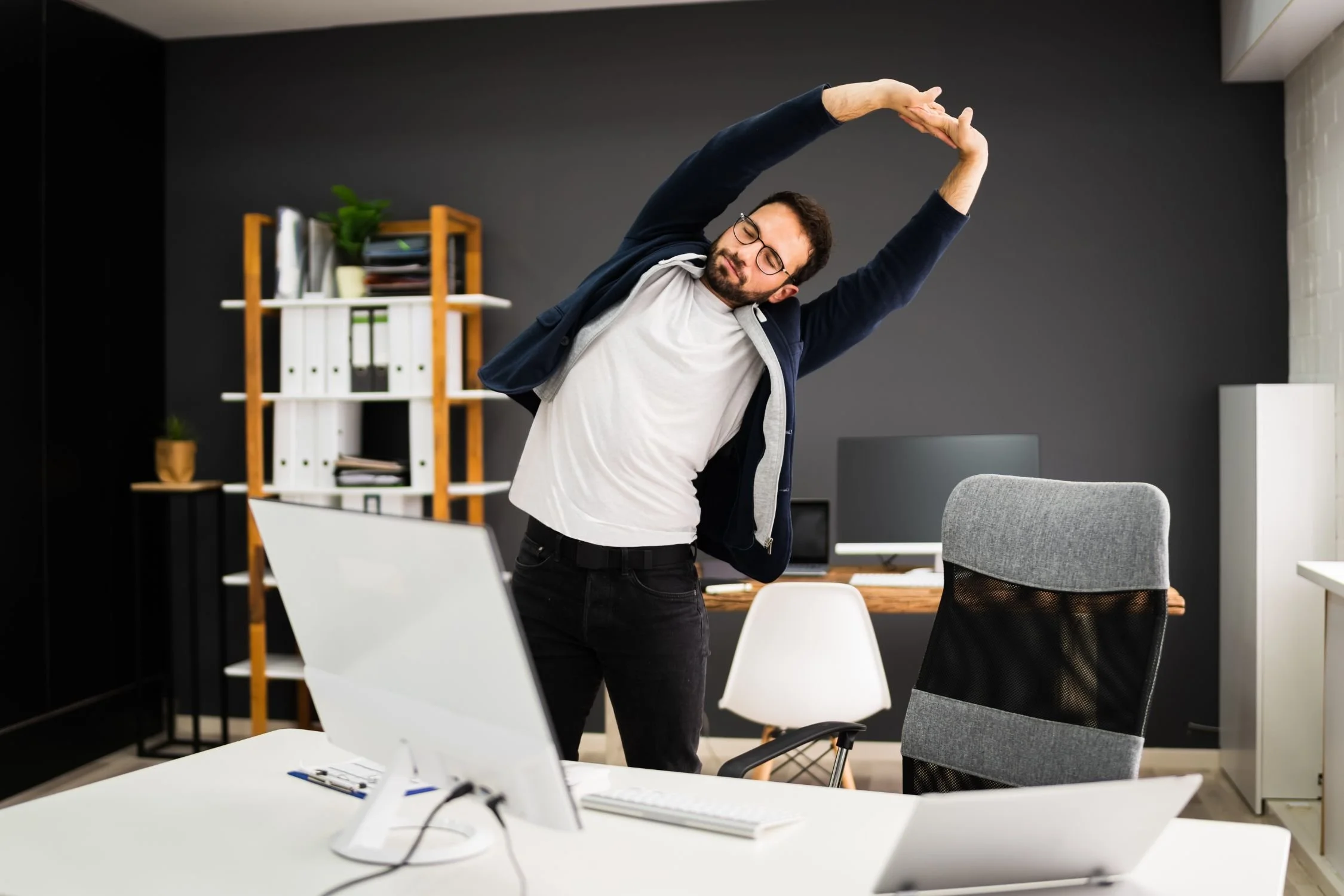
Stretching changes tissue length for a while without changing the signal driving the tightness. If your nervous system still reads the environment as unsafe, the tone comes back, often within the hour. Stress tension is a tone problem more than a flexibility problem, which is why slow breathing, warmth, rhythm, and skilled touch tend to outperform aggressive stretching.
The Breath and Tension Loop
Stress pushes breathing up into the chest. Chest breathing recruits the scalenes and other neck muscles as accessory breathing muscles, so those muscles end up working thousands of extra times a day. They get tight and tender, the ribcage stops moving well, and the diaphragm does less of its job. Then you feel neck tension, so you stretch your neck, and the loop continues because nothing changed about how you breathe.
The Pain, Stress, and Tension Cycle
Stress creates bracing. Bracing creates discomfort. Discomfort creates worry, worry reduces movement, and less movement means more stiffness. Clients often arrive somewhere in the middle of that loop, having tried to fix it with foam rolling and willpower.

Where Stress Causes Muscle Tension in the Body
Stress can create tension almost anywhere, though it concentrates in the areas involved in protection, posture, expression, breathing, and bracing.
Neck and Shoulder Tension From Stress
The upper traps get most of the blame and are only part of the story. Levator scapulae creates that sharp spot along the inside edge of the shoulder blade. The scalenes work overtime when you breathe into your chest. The suboccipitals at the base of the skull tighten with forward head posture and often refer pain into a headache. The pecs shorten from hours of reaching toward a keyboard, which pulls the shoulders forward and leaves the upper back holding you up.
Jaw Tension From Stress
The masseter is one of the strongest muscles in the body for its size, and it can hold a low grade clench all day without you noticing. That shows up as temple soreness, ear pressure, tired cheeks, headaches, and neck tightness, since the jaw and upper neck work together. Nighttime grinding adds another layer, and many people only learn about it from a dentist.

Stress Muscle Twitches All Over the Body
Stress can contribute to muscle twitching, because an activated nervous system is a more excitable one. Poor sleep, extra caffeine, dehydration, and electrolyte imbalances push in the same direction, and stress usually brings several of those with it. Twitching in the eyelid, calf, or forearm is common, tends to come and go, and often calms down once sleep and hydration recover.
Twitching all over the body deserves more than a quick assumption. Medication side effects, nerve irritation, thyroid issues, and other conditions can all produce it. Persistent twitching, twitching that is getting worse, or twitching with weakness, numbness, coordination changes, or severe cramping and spasm should be evaluated by a doctor rather than explained away as anxiety.
Stress Clenching in the Pelvic Floor and Sphincter Muscles
The pelvic floor braces under stress the same way the jaw does. Some people grip the abdomen, glutes, pelvic floor, or anal sphincter without any awareness of doing it, often during concentration, anxiety, or long stretches of sitting. That gripping can overlap with constipation, tailbone discomfort, urinary urgency, pelvic pain, and difficulty relaxing enough to have a comfortable bowel movement. Breath holding reinforces it, since the diaphragm and pelvic floor move together.
Fernz does not treat pelvic floor dysfunction, and we say that plainly. Persistent pelvic or sphincter clenching, pain, leakage, urinary symptoms, or chronic constipation belongs with a pelvic floor physical therapist or a medical provider. We wrote more about the constipation side of this in our article on why chronic constipation can be dangerous.
Upper Back and Chest
Emotional guarding is visible in the upper body. Shoulders round, the chest closes, the ribcage compresses, and breathing gets smaller. That combination creates the stubborn knots between the shoulder blades that people dig into for years, when tight pecs and restricted ribs are half the problem.
Low Back and Hips
Sitting plus stress is rough on the low back. The abdominal wall braces, the hip flexors shorten, the glutes grip, and the low back holds a constant low level effort. Chronic back pain that flares during stressful seasons is common, and persistent low back pain, especially with leg symptoms, deserves a physical therapist.
Diaphragm and Belly
The diaphragm is a muscle and responds to stress like one. When it stops moving through full range, the belly feels tight and full, digestion slows, and bloating gets worse. Cortisol also slows the contractions that move waste through the colon, which is why stressful seasons and constipation arrive together so often. Our article on how emotional stress affects gut health goes deeper on that connection.

Why Neck and Shoulder Tension Feels So Stubborn
Neck and shoulder tension from stress feels stubborn because it is almost never just the shoulders. It is a pattern that runs through the jaw, the ribcage, the breath, the chest muscles, screen posture, and nervous system arousal, and pressing harder on one sore trapezius does not interrupt any of it.
Think about how a stressful workday unfolds. You open a laptop that sits below eye level and lean in, so your head drifts forward and the suboccipitals and upper traps hold more weight than they were built for. A tense email lands, your breathing climbs into your chest, and your scalenes start assisting. Your jaw sets. Three hours pass without you standing up, and by evening your neck feels like a board. Every piece of that is fixable, and very little of it responds to one deep tissue session that chases the tightest spot.
Why a Balancing Bodywork Approach Matters Here
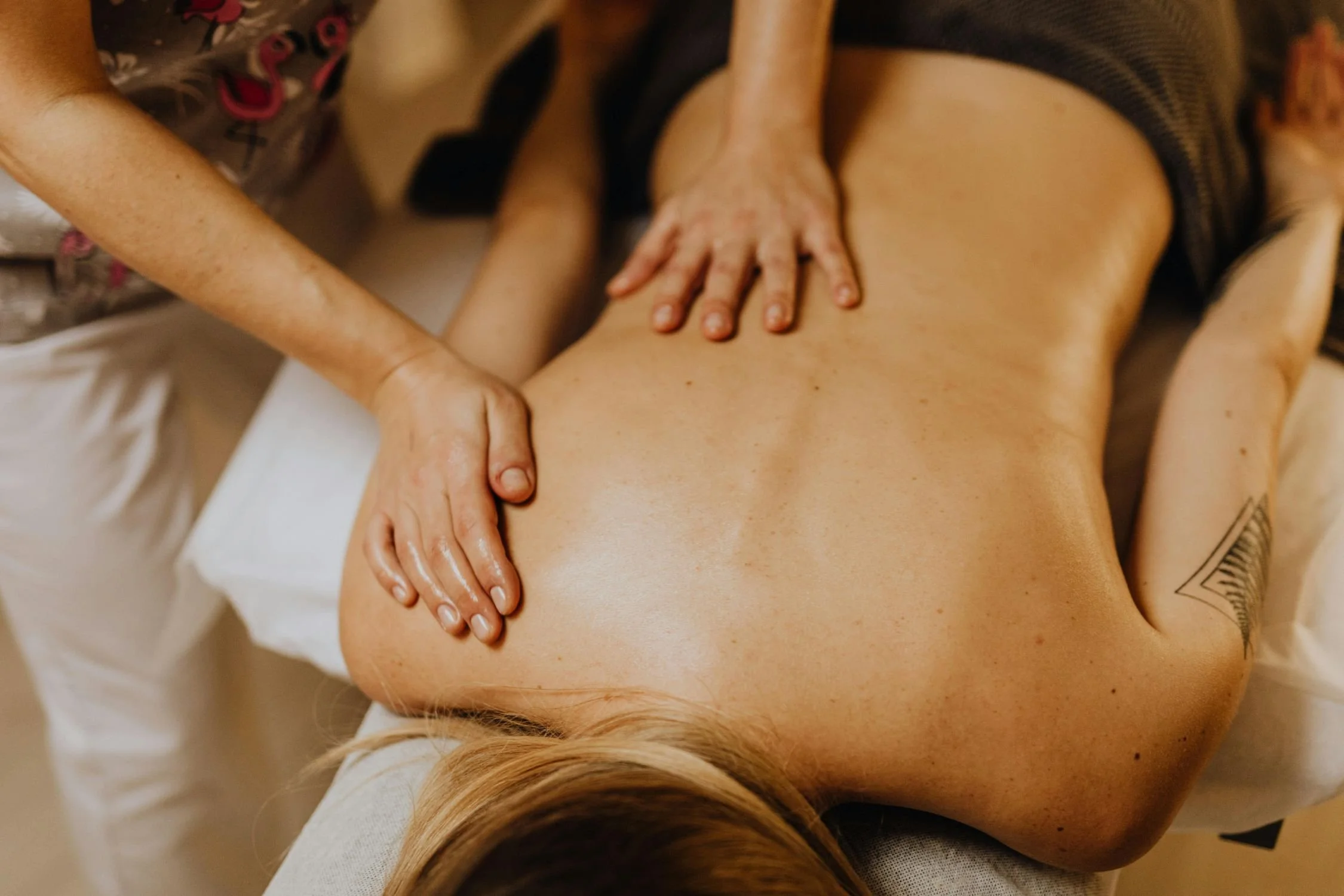
Allan's bodywork at Fernz is built around balance, which means noticing where the body is over gripping, compensating, or protecting, then using skilled touch to help the nervous system and soft tissue let go more naturally. For chronic tension through the neck and shoulder muscles, that means working the whole chain rather than the loudest spot, so the jaw, neck, chest, upper back, and breath get addressed together.
It also respects something important about stressed tissue. A body that is already braced tends to brace harder against aggressive pressure, so slower and better paced work usually gives you more release than force does.
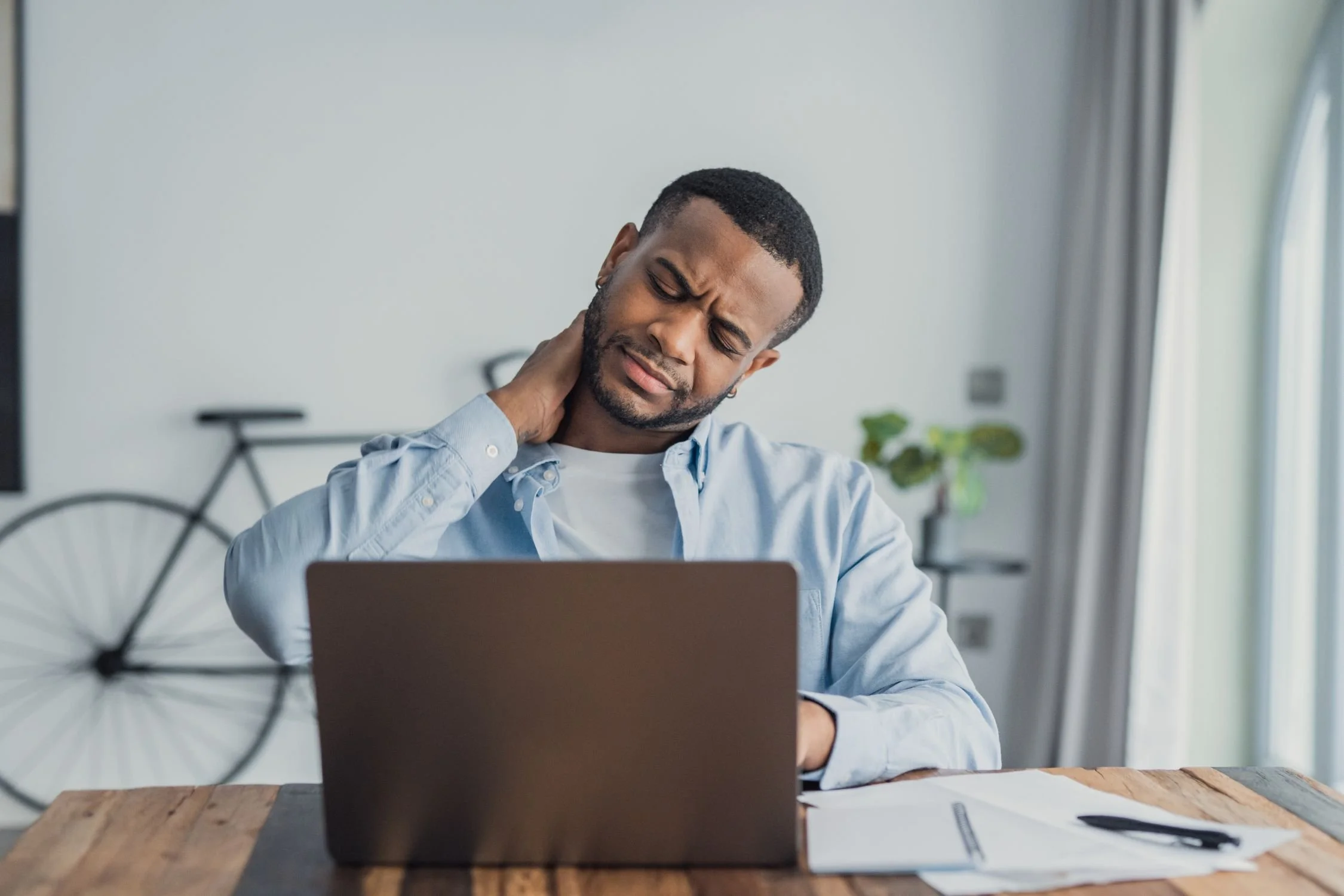
Jaw Tension From Stress and the Clenching Pattern
Jaw tension from stress often happens below awareness. You may not notice it until your jaw feels tired, your temples ache, your neck tightens, or you wake up with facial soreness and no idea why.
Daytime clenching tends to be a concentration habit that shows up during traffic, hard conversations, and deadlines. Nighttime grinding has its own drivers, and it can wear teeth, irritate the jaw joint, and leave you sore before the day starts. The two often travel together during high stress seasons.
A simple reset helps more than people expect and costs nothing. Rest your lips together with your teeth slightly apart, place your tongue gently on the roof of your mouth behind your front teeth, and take a slow exhale that is longer than your inhale while your shoulders drop. Massaging the muscle at the corner of your jaw for thirty seconds helps too, and skipping gum for a couple of weeks gives it a real break.
Some jaw symptoms belong with a dentist or a doctor rather than a wellness studio. A jaw that locks, painful clicking, tooth pain, cracked or worn teeth, trouble chewing, or facial swelling all warrant professional dental evaluation. Jaw pain that arrives with chest pain, shortness of breath, or pain spreading into the arm is an emergency and needs immediate medical attention.

How to Relieve Stress Muscle Tension
To relieve stress muscle tension, calm the nervous system first, then restore breath, movement, hydration, sleep, and tissue quality. Attacking the tightest muscle first is the most common mistake we see, because reducing muscle tension works far better once the body reads the situation as safe.
Make Your Exhale Longer Than Your Inhale
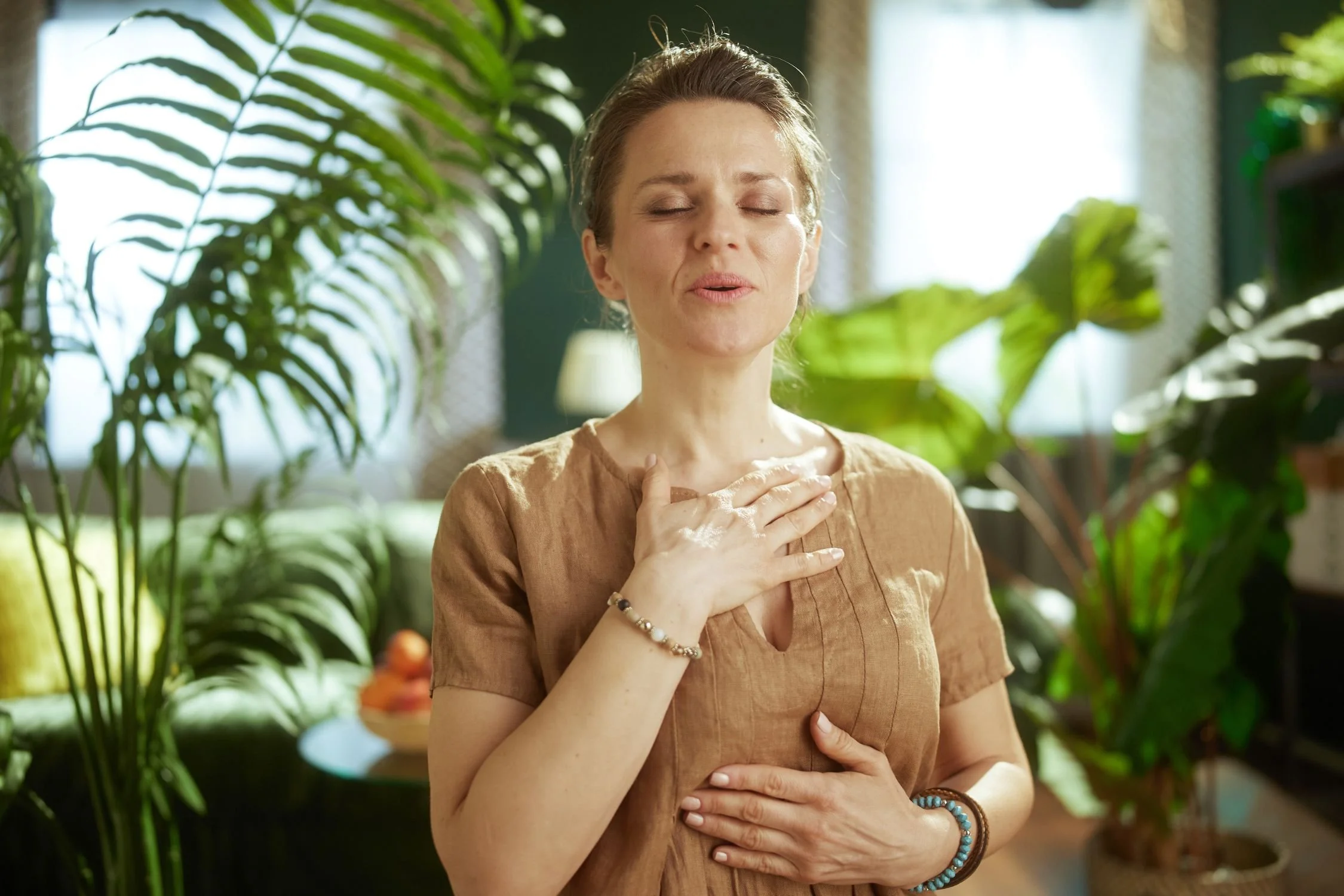
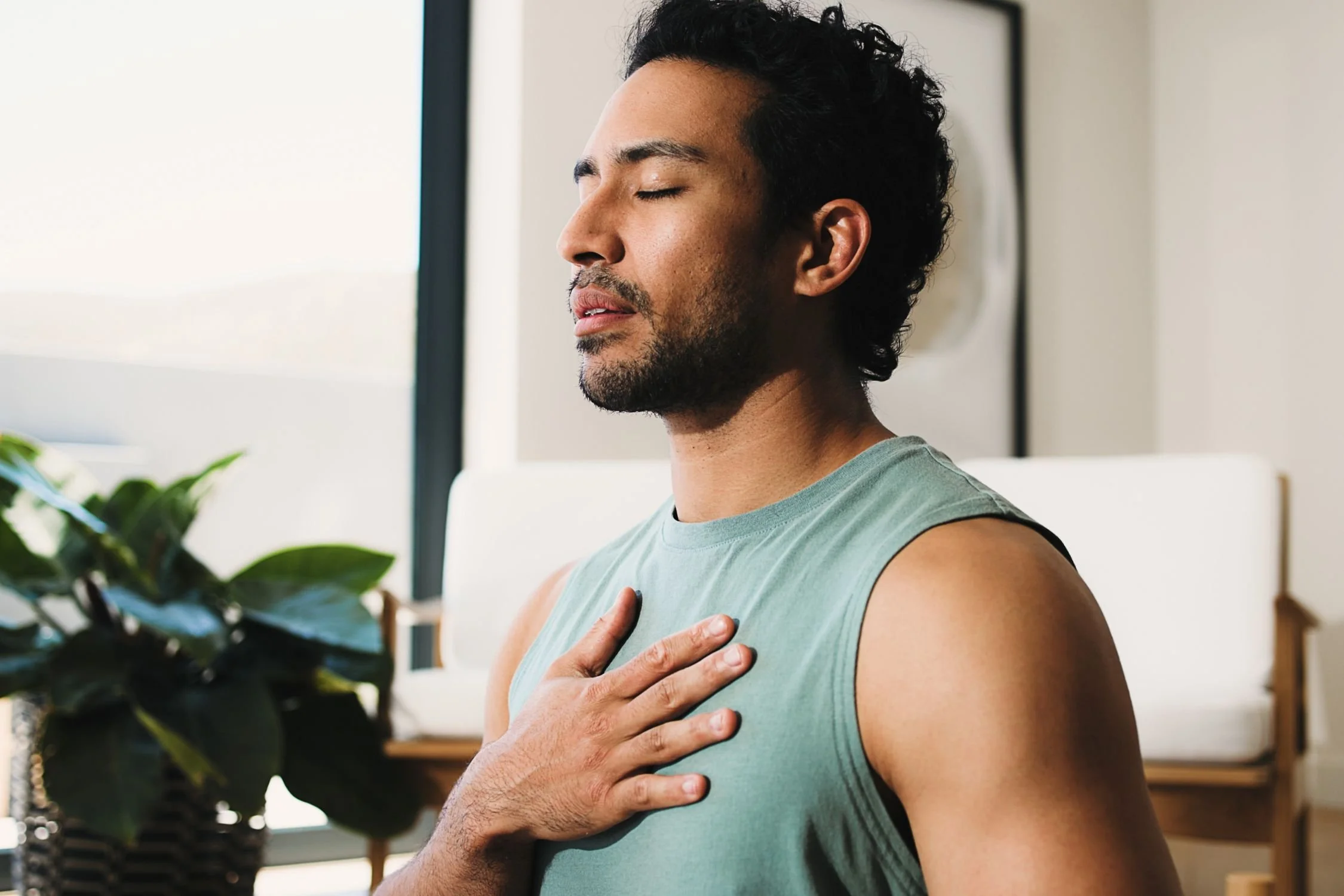
The exhale is the part of the breath that signals your body to downshift. Deep breathing works here because it slows heart rate and breathing together. Breathe in through your nose for about four seconds, then out for six to eight, and let your jaw and shoulders soften on every exhale. Two minutes of that does more for stress tension than two minutes of stretching.
Practice 360 Degree Breathing
Place your hands on the sides of your lower ribs and breathe so your ribs widen sideways and into your back rather than up toward your collarbones. That gives the diaphragm its job back and takes load off your neck. Five slow breaths a few times a day will do more for chronic neck tension than most people believe.
Try Relaxation Techniques Like Progressive Muscle Relaxation
Progressive muscle relaxation is one of the most researched relaxation techniques for tension, and it costs nothing to try. Tighten one muscle group for about five seconds, release it completely, and notice the difference before moving to the next group, working from your feet up to your jaw. Pairing it with mindfulness or simple breathing exercises helps calm the stress response and teaches you where you have been holding without realizing it.
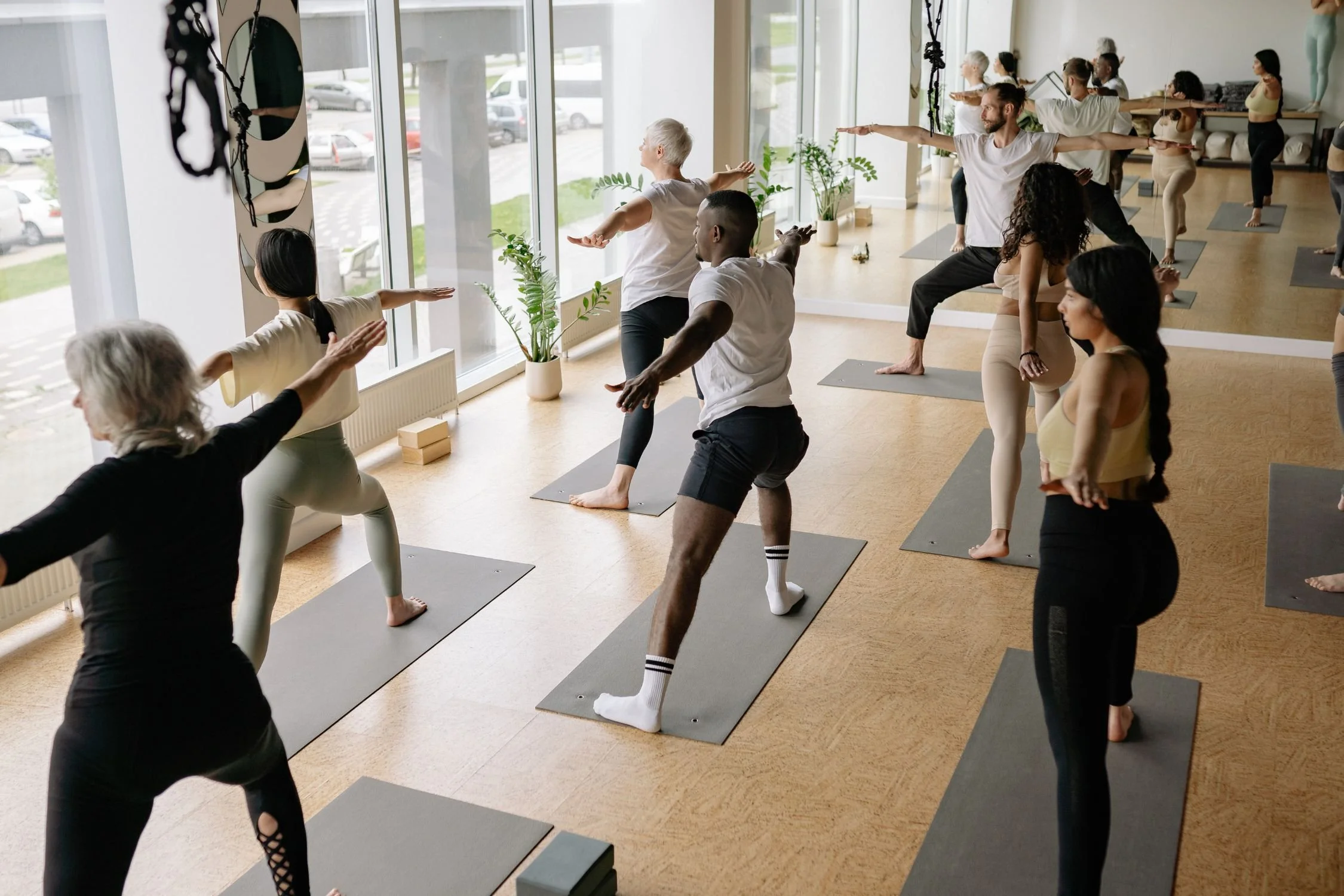
Move Every Thirty to Sixty Minutes
Stillness plus stress is what turns tension into pain, and you do not need a workout to interrupt it. Stand, roll your shoulders back, turn your head slowly both directions, walk to fill a glass of water. Movement also drives lymphatic flow, which depends on muscle contraction and breathing to circulate. We covered more of those small habits in 15 ways to stimulate your lymphatic system.
Use Heat and Gentle Pressure
Warmth gives guarded tissue permission to soften, which is why a hot shower on the back of your neck feels better than something that simple should. Gentle sustained pressure sends safety signals too. Avoid aggressive pressure on tissue that is inflamed or acutely injured.
Hydrate and Replenish Minerals
Dehydration worsens cramping, twitching, and general tissue irritability, and stressed people usually drink more coffee and less water. Steady sips through the day beat a giant bottle at 6pm, and if you sweat heavily or fly often, a small amount of electrolytes helps you hold onto what you drink.

Protect Your Sleep
Sleep is where tissue recovery and pain regulation happen. Poor sleep raises next day pain sensitivity, worsens nighttime clenching, and makes stress harder to handle, which feeds the tension right back. A consistent bedtime is unglamorous and it works.
Try Massage or Bodywork
Massage and bodywork help relieve muscle tension by giving the body slow, skilled input that supports tissue mobility, circulation, and nervous system downshifting. For a pattern that has been building for months, hands on work often reaches what self care alone cannot.
Add ELT When Stress Feels Puffy or Heavy
Electro Lymphatic Therapy helps when stress shows up in your body as puffiness, heaviness, sluggish recovery, or that stuck feeling stretching never resolves. It works on a different layer than massage, which is why the two pair well.
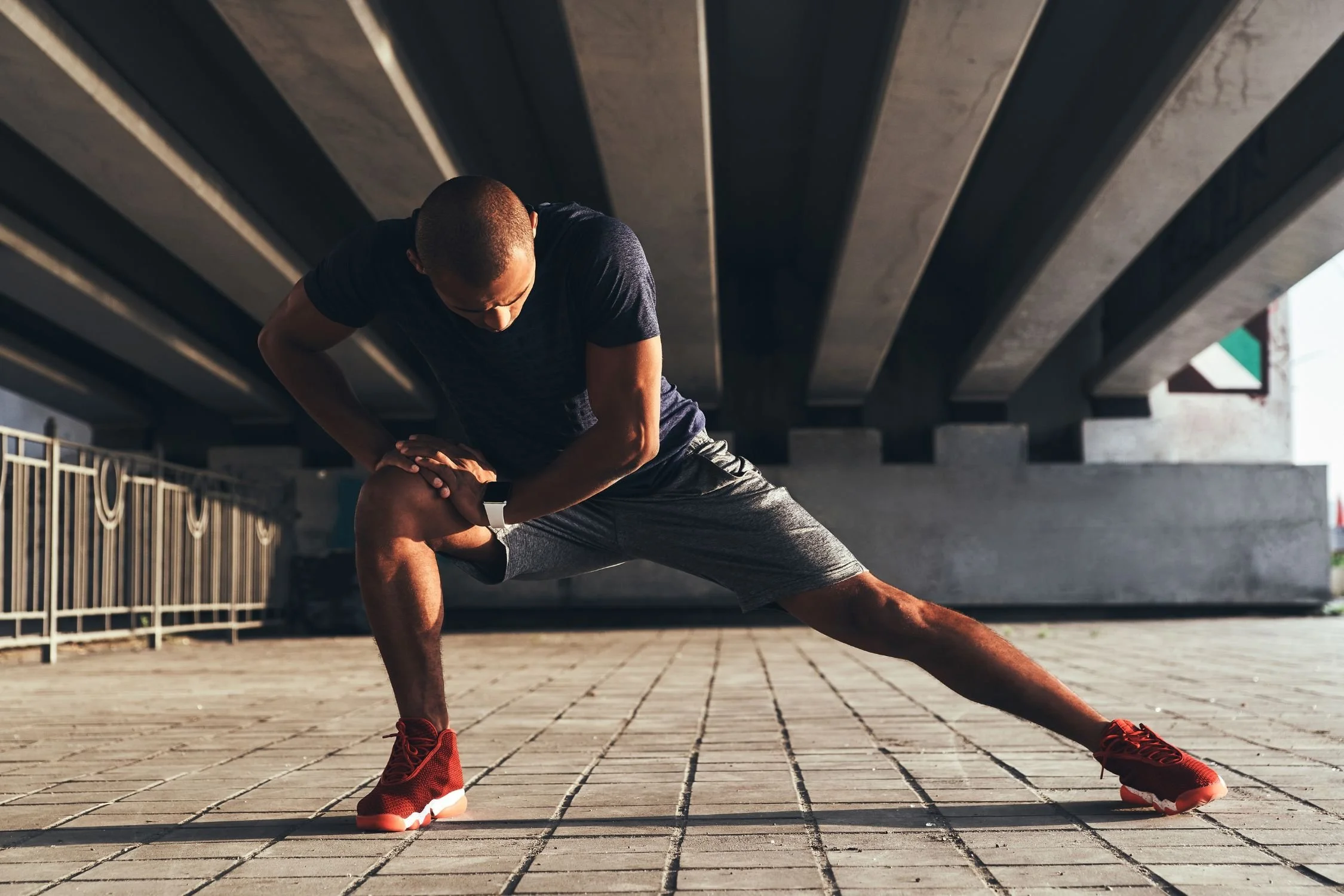
What Regular Exercise Helps Recover From Repetitive Stress Muscle Pain
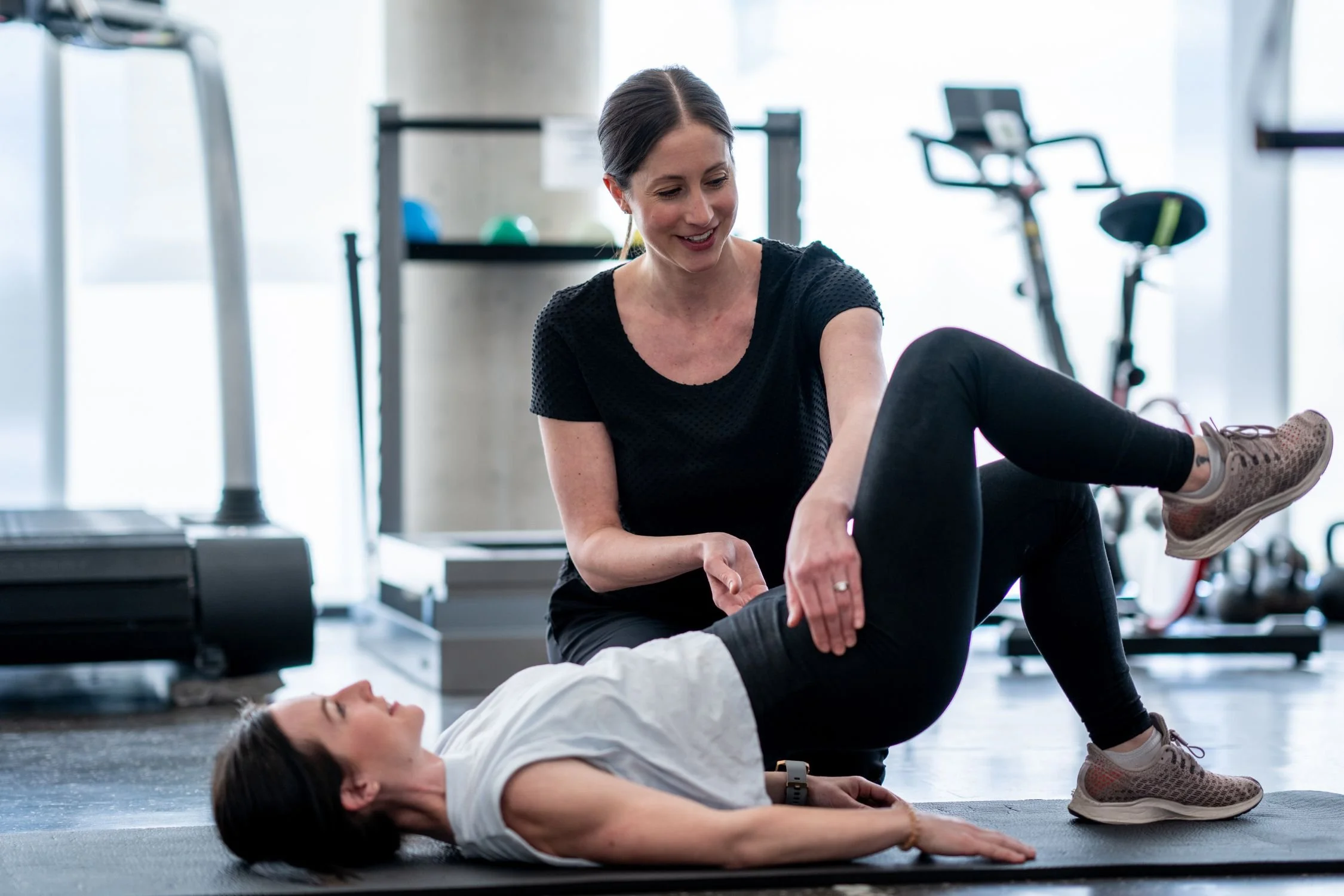
Regular exercise helps both stress related and repetitive strain pain, though the right choice depends on the source. Emotional stress tension responds to rhythm, breath, and nervous system regulation. Repetitive strain and muscle strain respond to load management, strength, and changing the mechanics that created it. Most people benefit from the same foundation, which is walking, mobility, strength training, and frequent movement breaks.
Walking is the most underrated option on that list. It is low risk, it improves circulation, it releases endorphins, it lowers stress arousal, and the rhythmic muscle contraction supports lymphatic flow. Twenty minutes outside beats almost any complicated protocol for someone who feels wired and stiff.
Strength training builds tissue that tolerates load, which matters enormously for repetitive strain. When the mid back, glutes, deep core, and rotator cuff are weak, other structures pick up work they were never built for, and those are the ones that end up hurting. Start lighter than you think you should.
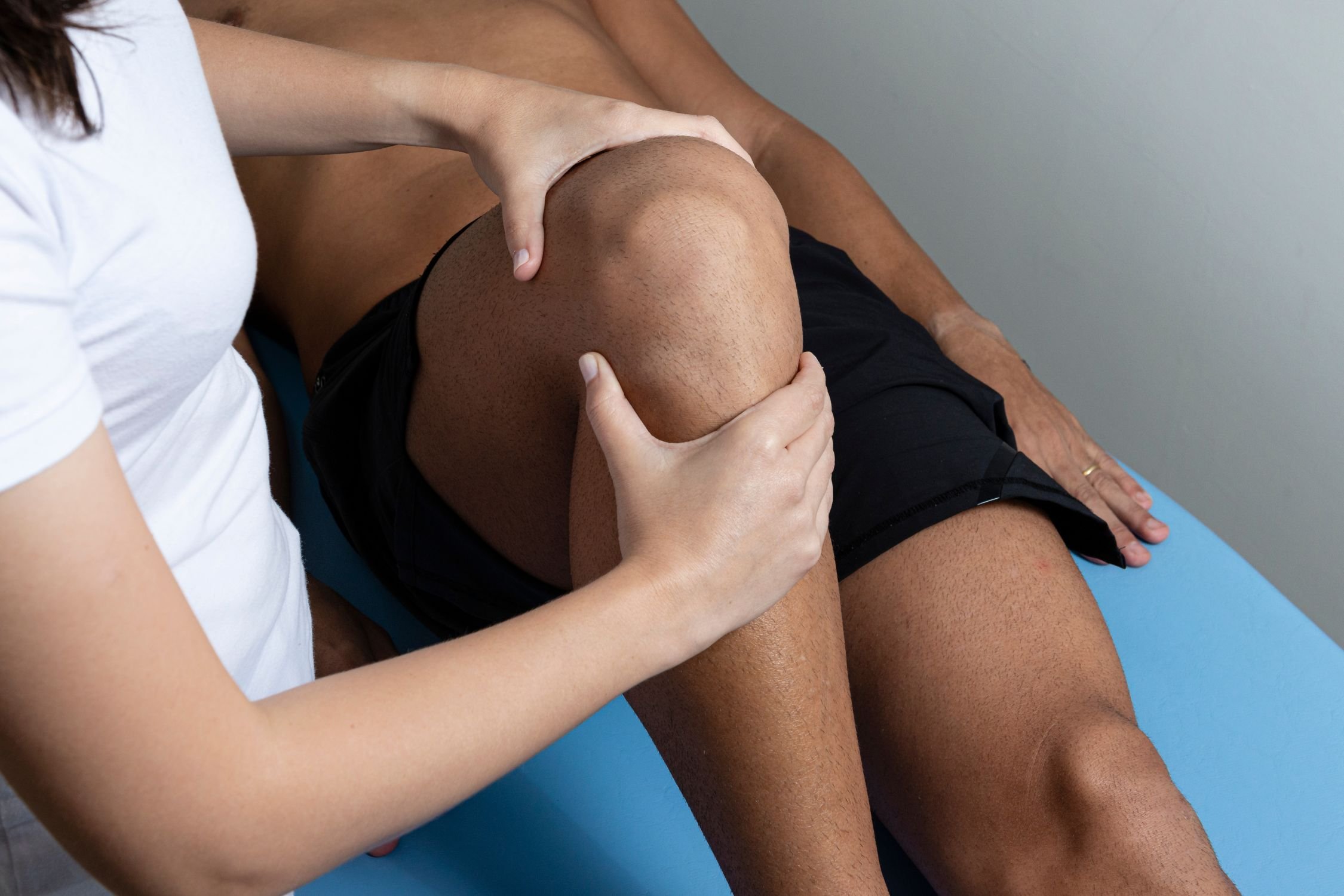
Mobility work belongs in the mix for the neck, thoracic spine, shoulders, ribcage, and hips, ideally in short daily doses rather than one long weekend session. Restoring range of motion in the mid back and hips does more to improve flexibility across the whole body than hammering the hamstrings ever will. Posture breaks matter just as much. Change position often, look away from your screen, check your jaw, and let your shoulders drop.
Consider physical therapy when repetitive strain pain persists past a few weeks, when you have numbness, weakness, or radiating pain, when the pain interferes with your work, or when you suspect tendon or nerve involvement. A wellness session complements that care. It does not replace it.

Massage for Stress Related Muscle Tension
Massage for stress related muscle tension works best when the goal is release rather than force. Stress tension needs slower, more precise, nervous system friendly bodywork that helps the body feel safe enough to let go. Pressure that overwhelms a guarded body gives you a day of relief and then everything comes back.
What good bodywork offers is meaningful. Better tissue mobility, improved local circulation, less muscle fatigue in overworked areas, restored awareness in places you had stopped noticing, a real shift into a calmer state, and less guarding through the neck, shoulders, upper back, hips, and the areas around the jaw. Research has looked at massage and stress markers like cortisol, and the National Center for Complementary and Integrative Health notes that massage therapy has been studied for pain, anxiety, and quality of life, with results that vary by condition. That honesty matters. Massage is supportive care with real value, and it does not cure anything.
Why Massage and ELT Work Well Together
Massage addresses muscular guarding. ELT supports lymphatic flow and fluid movement. Clients who feel tight, puffy, and stuck at the same time are dealing with both layers, and treating only one explains why so many people feel partly better and never fully reset.
Where Electro Lymphatic Therapy Fits Into Stress Related Tension
Stress does more than tighten muscles. It can leave the body feeling heavy, puffy, and slow to recover, and that experience has its own physiology behind it. Stressed people sit more, breathe shallowly, sleep less, drink more caffeine, and hydrate poorly. Lymphatic flow depends on movement, muscle contraction, and breathing, so a stressed lifestyle quietly removes most of what keeps lymph circulating.
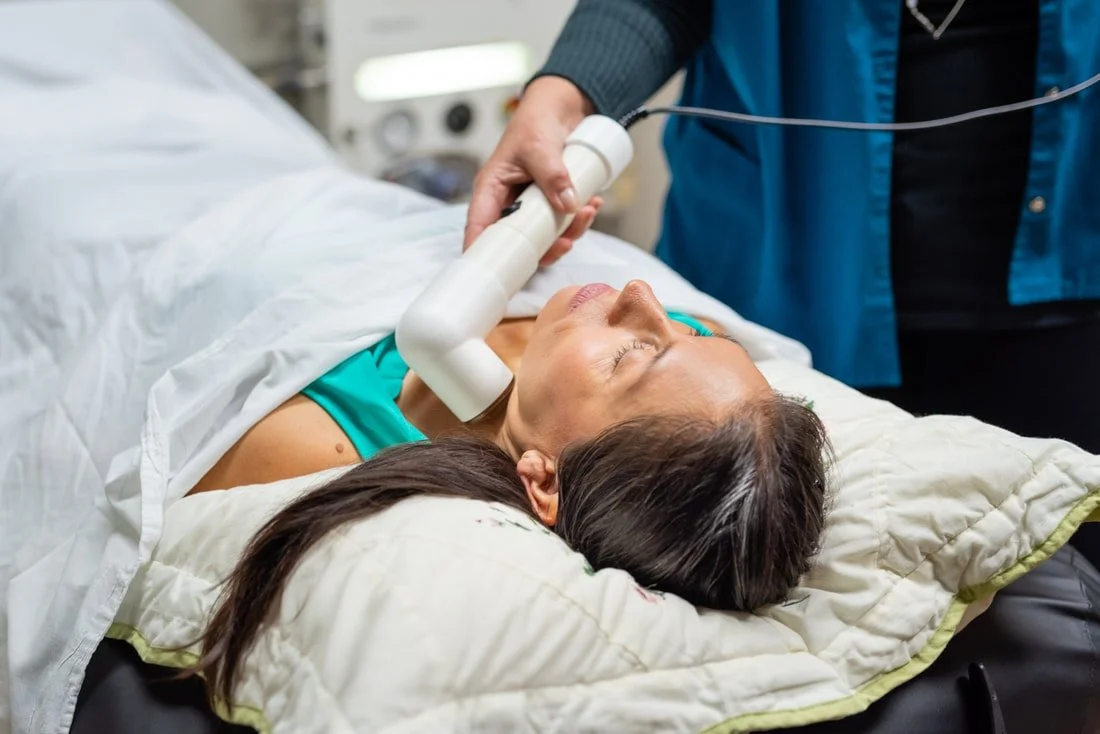
Electro Lymphatic Therapy at Fernz is a gentle, non invasive, light touch treatment that uses vibrational and electrostatic technology to encourage lymphatic movement without the deep pressure of traditional massage. It may help with puffiness, post travel heaviness, and that sluggish, stagnant feeling that lingers after a hard season. Our complete guide to lymphatic drainage in Los Angeles explains the treatment in more detail, and our article on 10 signs of a sluggish lymphatic system covers what stagnation actually looks like day to day.
ELT is a different tool than massage, and the difference is the point. Massage works directly with soft tissue and muscle tone. ELT works with fluid and flow, using a touch so light that clients who find deep pressure overwhelming often prefer it.
Start with ELT when the body feels puffy more than tight, when there is post travel or cleared post surgical swelling, when hormone driven puffiness is part of the picture, or when deep pressure feels like too much right now. Start with Allan's bodywork for tight neck and shoulders, jaw clenching, upper back knots, restricted movement, and desk posture bracing. When someone arrives tight and puffy and bloated at once, a combined approach usually beats choosing one.
Stress, Digestion, Lymph Flow, and the Full Body Pattern
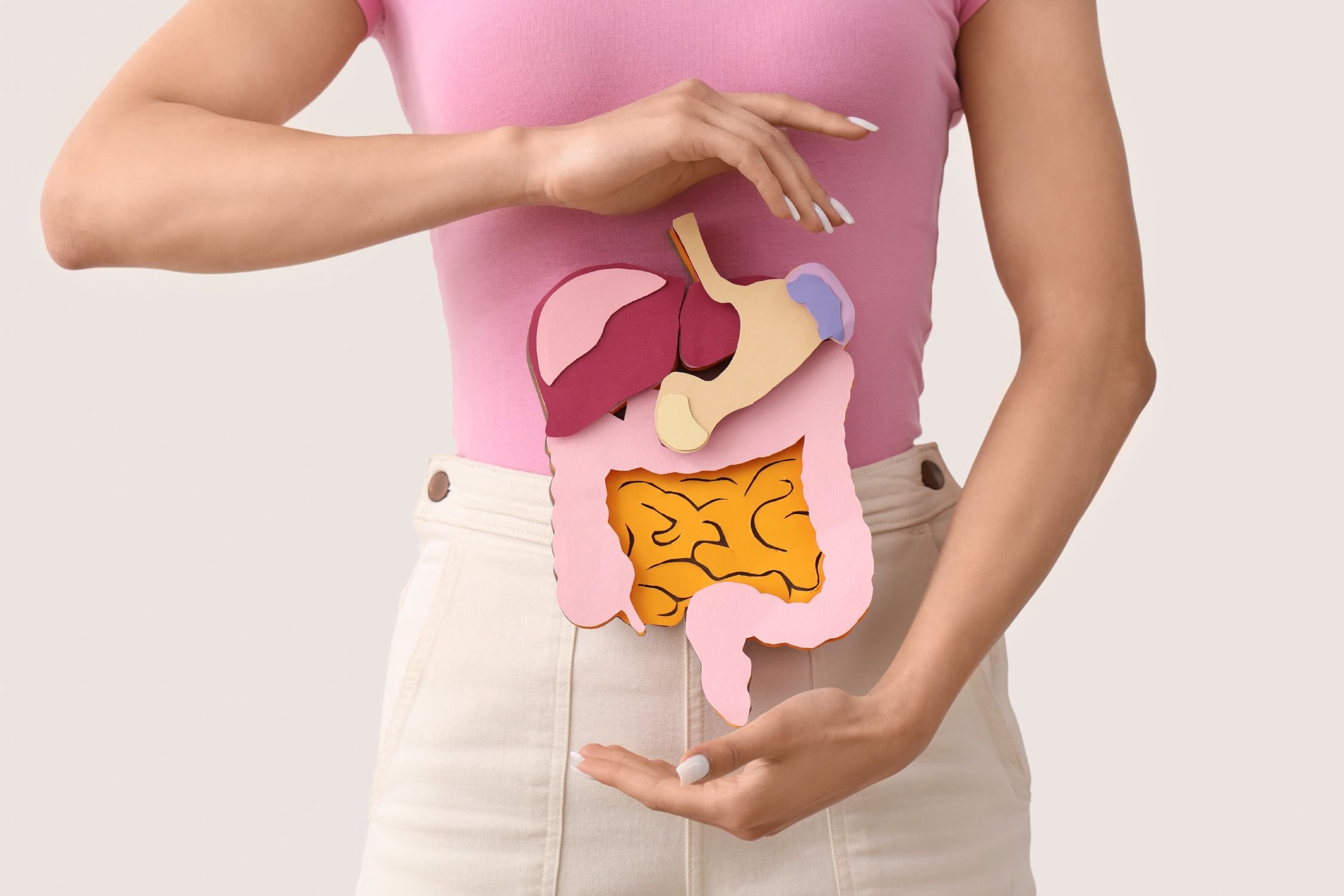
Stress tension rarely stays in one category. The same person who comes in with tight shoulders and a clenched jaw usually also mentions bloating, constipation, puffiness, and terrible sleep, then apologizes for listing so many unrelated things. They are all connected. Stress affects the muscular, digestive, nervous, and lymphatic systems at once.
Cortisol slows colon motility. Shallow breathing reduces the diaphragmatic movement that helps lymph and digestion move. Sitting still all day slows fluid flow, poor sleep raises pain sensitivity, and belly bracing makes bloating feel worse. Each one feeds the others, which is how a stressful quarter turns into a body that feels stuck everywhere at once. Hormone shifts and gut imbalance often ride along with it, which we covered in gut health and hormones.
Seeing the whole pattern is what lets you choose the right starting point. Bodywork with Allan for the muscular holding. ELT for the lymphatic heaviness. Colon hydrotherapy for clients whose digestion has slowed during a stressful stretch. This is the same whole person thinking we described in our guide to holistic wellness in Los Angeles.

The Fernz Stress Reset
We built the Fernz Stress Reset for clients who arrive tight, puffy, heavy, braced, bloated, and generally overwhelmed by what a stressful season has done to their body. It follows the same rhythm as everything we do at Fernz, which is cleanse, rebalance, restore.
Cleanse addresses what stress has slowed down. When cortisol stays elevated for months, digestion often turns sluggish and elimination gets irregular. Colon hydrotherapy can support clients who feel backed up and heavy during those stretches. It is supportive care rather than a stress treatment, and it belongs at the start for the right person.
Rebalance is where the tension work happens. ELT addresses the fluid side, the puffiness, and the heaviness. Breath and body awareness cues carry that work home, because the hour on the table matters most when the rest of the week supports it.
Restore is the part people skip, and then they wonder why the tension came back. A monthly session, a reset after travel, extra support during a high stress season, and steady attention to sleep and hydration keep the pattern from rebuilding. Tending to your baseline health can help your body handle stress before it turns into another month of bracing. If you are unsure which service fits, our services page lays out the options, or tell us what your body has been doing and we will point you in the right direction.

When Muscle Tension Is Not Only Stress
Stress causes muscle tension and pain, and every symptom should not be filed under stress by default. Some things need a doctor first.
Seek medical care if muscle tension, pain, twitching, or clenching arrives with chest pain, shortness of breath, or pain spreading to the jaw, arm, or back. The same goes for sudden weakness, numbness, loss of coordination, a severe or unusual headache, fever, unexplained weight loss, recent trauma, or swelling with redness and warmth in a limb.
For twitching, the concern is persistence and progression. Twitching all over the body can absolutely be stress related, and if it is worsening, lasting for months, or showing up with weakness, numbness, coordination changes, or severe cramping, it needs a medical evaluation.
Jaw locking, severe clicking, tooth pain, or trouble chewing belongs with a dentist. Persistent pelvic pain, constipation, urinary symptoms, leakage, or difficulty relaxing belongs with a pelvic floor physical therapist or your provider. If you are struggling with persistent anxiety alongside the physical symptoms, a licensed mental health provider belongs on your team too. After any surgery, get clearance before booking bodywork or lymphatic work.
Our FAQ page covers contraindications, and we refer out whenever something falls outside our scope.

Fernz Wellness - Los Angeles Colon Hydrotherapy
Learn more about us here and discover how our services can be a vital part of your journey to optimal health. We look forward to supporting you on your journey to better digestive health and improved well-being.
Our address is 5486 Wilshire Blvd. Los Angeles, CA 90036 and you can also call or text us at (424) 281-9366.

Conclusion
Muscle tension from stress is real and physical. It creates muscle pain, jaw clenching, neck and shoulder tightness, twitching, low back aching, pelvic floor gripping, and a body that stays braced when nothing is currently wrong. Your body is protecting you, a little too well and for a little too long.
Relief comes from the whole loop rather than one piece of it. Calm the nervous system, restore your breath, move often, hydrate, protect your sleep, and give the tissue skilled hands on support when the pattern has been building for months.
If stress has been showing up as tight shoulders, jaw tension, muscle pain, puffiness, heaviness, or digestive sluggishness, Fernz Wellness in Los Angeles is a calm, private place to reset. Explore Electro Lymphatic Therapy for the heaviness, or ask about the Fernz Stress Reset.
Book your appointment here and tell us what your body has been carrying. We will build the approach around it.

Frequently Asked Questions About Muscle Tension From Stress
Can stress cause muscle tension?
Yes. Stress activates the fight-or-flight response, which prepares muscles to brace, protect, or move quickly. When stress becomes chronic, muscles often stay guarded, especially in the neck, shoulders, jaw, back, hips, diaphragm, and pelvic floor, even after the stressful moment has passed.
Can stress cause muscle pain?
Yes, stress can contribute to muscle pain. Prolonged muscle contraction creates soreness, fatigue, and tenderness, and stress also worsens sleep and raises pain sensitivity. Pain that is new, severe, one sided, worsening, or unexplained should be evaluated by a healthcare provider rather than assumed to be stress.
What is the link between anxiety and muscle tension?
Anxiety keeps the stress response switched on, so the body releases hormones like adrenaline and cortisol without a clear event to resolve. Muscle tension is a recognized symptom of generalized anxiety, and it commonly settles in the jaw, neck and shoulder muscles, chest, and abdomen.

Why do I get neck and shoulder tension from stress?
Stress lifts the shoulders, tightens the jaw, moves breathing into the chest, and increases protective muscle guarding. Screen posture, forward head position, shallow breathing, extra caffeine, poor sleep, and long workdays without breaks all stack together, which is why neck and shoulder tension feels so stubborn.
Can stress cause jaw tension?
Yes. Stress commonly causes jaw clenching, teeth grinding, masseter tightness, temple soreness, headaches, and irritation of the jaw joint. If your jaw locks, clicks painfully, affects chewing, or comes with tooth pain or facial swelling, see a dentist or healthcare provider for evaluation.
Can stress cause muscle twitches all over the body?
Stress can contribute to twitching by making the nervous system more excitable and by disrupting sleep, hydration, caffeine intake, and electrolyte balance. Persistent twitching, worsening twitching, or twitching alongside weakness, numbness, coordination changes, or severe cramping should be medically evaluated rather than dismissed.
Can stress cause sphincter or pelvic floor clenching?
Stress can create unconscious clenching in the jaw, abdomen, glutes, pelvic floor, and anal sphincter, often during concentration or long periods of sitting. Persistent pelvic tension, pain, constipation, urinary symptoms, leakage, or difficulty relaxing should be discussed with a pelvic floor physical therapist or healthcare provider.
Do relaxation techniques help reduce muscle tension?
Yes. Progressive muscle relaxation, mindfulness, and breathing exercises that lengthen the exhale help calm the stress response and lower muscle tone. They work best done regularly rather than only during a flare, and they pair well with movement, warmth, sleep, and hands on bodywork.
How do you relieve muscle tension from stress?
Start by calming the nervous system with slow breathing, longer exhales, warmth, gentle movement, hydration, and better sleep. Then add jaw release, shoulder mobility, walking, and hands on bodywork. Electro Lymphatic Therapy can help when heaviness or puffiness is part of the pattern.
Is massage good for stress related muscle tension?
Massage may help stress related muscle tension by supporting tissue mobility, circulation, body awareness, and nervous system downshifting. At Fernz Wellness, Allan's balancing bodywork addresses muscular holding patterns, while ELT can complement sessions for clients who feel heavy, puffy, or stuck alongside the tightness.
What regular exercise helps repetitive stress muscle pain?
Walking, gentle mobility work, strength training, low impact cardio, and frequent posture breaks help most people recover from stress related and repetitive strain pain. Persistent pain, numbness, weakness, radiating symptoms, or suspected tendon or nerve injury should be evaluated by a physical therapist or healthcare provider.
Additional Resources
Stress Effects on the Body – American Psychological Association
Chronic Stress Puts Your Health at Risk – Mayo Clinic
Stress and Your Health – MedlinePlus
Generalized Anxiety Disorder: What You Need to Know – National Institute of Mental Health
Stress – National Center for Complementary and Integrative Health
Relaxation Techniques: What You Need to Know – NCCIH
Sleepless Nights? Try Stress Relief Techniques – Johns Hopkins Medicine
Bruxism (Teeth Grinding): Symptoms, Causes & Treatment – Cleveland Clinic
TMJ Disorders: Symptoms & Treatment – Cleveland Clinic
Benign Fasciculation Syndrome: Muscle Twitching – Cleveland Clinic
Hypertonic Pelvic Floor: Symptoms, Causes & Treatment – Cleveland Clinic
*The services provided by Fernz Wellness are intended for general wellness and educational purposes only. They are not designed to diagnose, treat, cure, or prevent any medical condition. Please consult with a healthcare provider before starting any new treatment or wellness routine. Results may vary.